GYEONGBOK PALACE PROJECTS
◈ Guide & Developer
◈ August 2022 ~ May 2026
Beginning as a volunteer guide, I expanded my engagement with Gyeongbokgung Palace through preservation research and software development, transforming firsthand observations into a digital archive designed to make cultural heritage more accessible and enduring.
From Living History to Digital Preservation❋ CULTURAL INTERPRETATIONTranslated the history and cultural significance of Gyeongbokgung Palace into accessible narratives for international visitors.
❋ GUIDE LEADERSHIP Trained more than 40 new volunteer guides in historical commentary, visitor engagement, and tour management.
❋ PRESERVATION RESEARCHInvestigated how cultural heritage can remain meaningful and protected amid Seoul’s continued urban development.
❋ DIGITAL ARCHIVINGTransformed research findings into a searchable, crowdsourced system for documenting palace photographs.
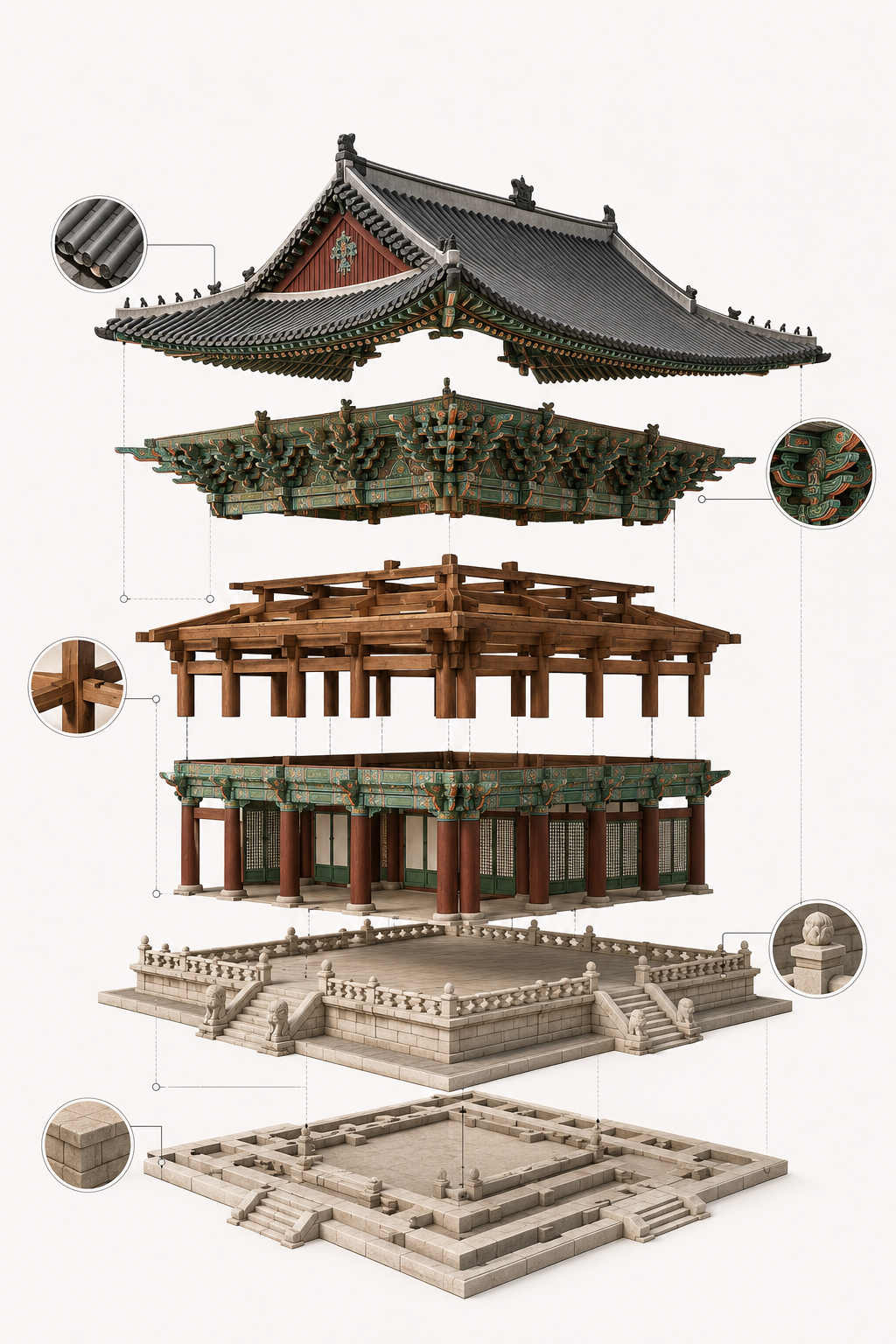
PHASE 01CULTURAL INTERPRETATION & GUIDE TRAINING
I began as a volunteer tour guide, delivering more than 90 hours of historical and cultural commentary to over 80 international visitors. Through sessions averaging 1.5 hours, I learned to translate complex historical information into engaging narratives for audiences from different cultural backgrounds. I later trained more than 40 new volunteers in commentary, visitor communication, and tour-route management.
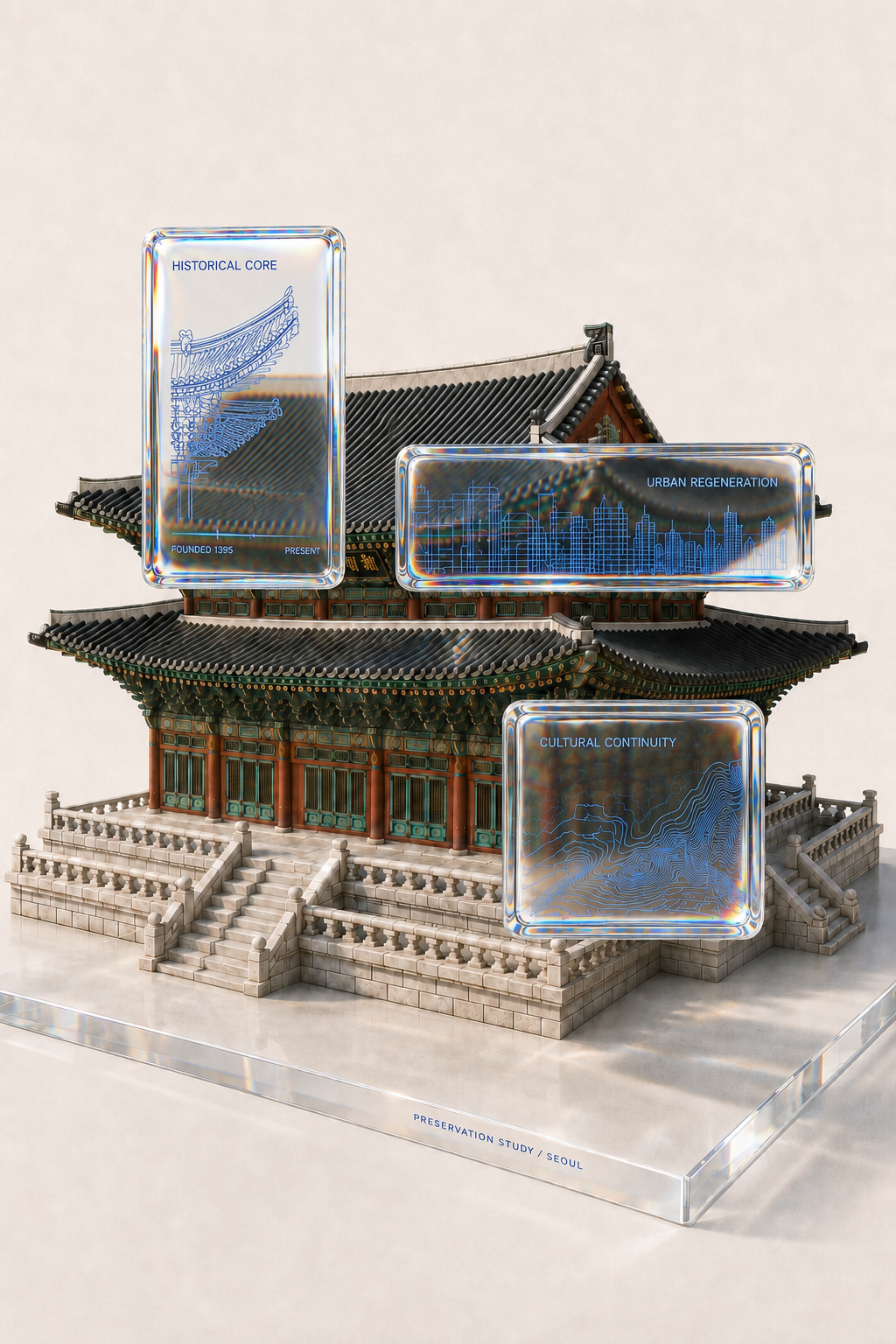
PHASE 02RESEARCH ON RESILIENT CITIES & HISTORICAL PRESERVATION
Repeated conversations with visitors revealed a shared curiosity: how can a historical site continue to hold its place within a rapidly changing modern city? This question led me to research Seoul’s approach to urban regeneration and write “Resilient Cities and Historical Preservation,” examining how development, cultural continuity, and economic growth can coexist.
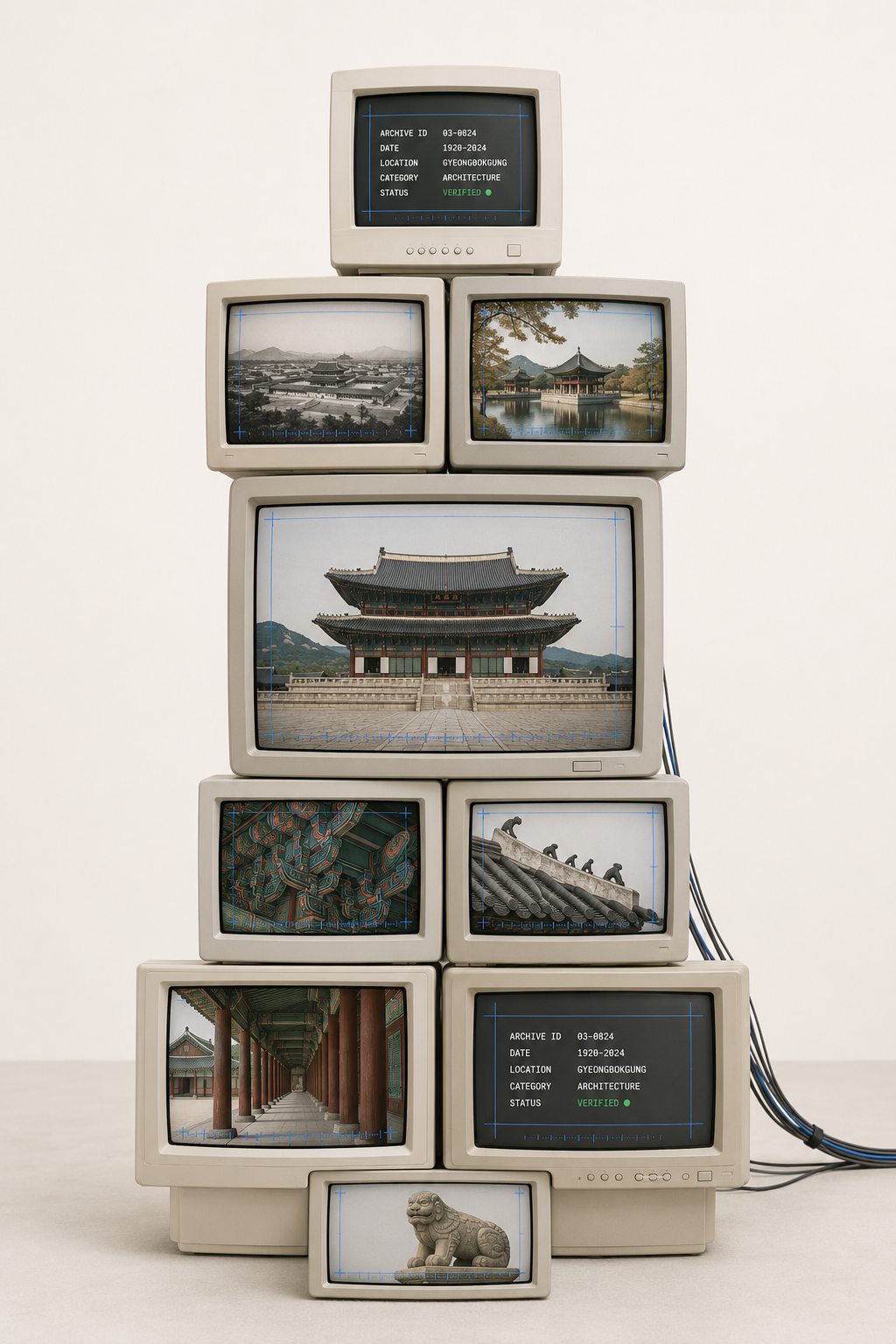
PHASE 03GYEONGBOK PALACE PHOTO DATA ARCHIVE
I translated my field experience and preservation research into a crowdsourced digital archive for Gyeongbok Palace photographs. The system uses metadata tagging and search functions to organize images and make records easier to discover, compare, and preserve over time. The resulting database program was officially registered as a computer program work with the Korea Copyright Commission.